

Senga Falls, Shosenkyo, Yamanashi Prefecture/Japan
2015年11月28日
4:48 PM
Tag Archives: photography
霜ばしら/Frost Pillars
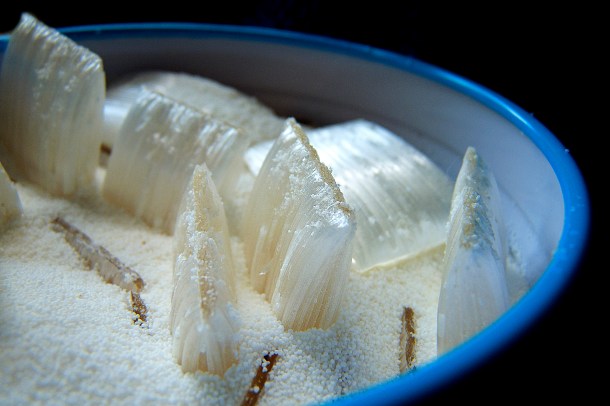
My husband and I received these delicate, delicious candies as a gift this past weekend.
Made from starch syrup, sugar, glutinous rice, and starch, Shimobashira (霜ばしら) are a traditional Japanese candy which are only sold between October and April in Miyagi Prefecture’s Sendai City.
Shimobashira means “frost pillar” and the candies are meant to resemble the small pillars of frost that form near the foot of Mount Zao during the winter season. In English, frost pillars are often called Needle Ice. They are formed when soil temperature is above freezing (0°C/32°F) and air’s surface temperature is below freezing.
The fragile candies are packed in rakugan flour—a mixture of sugar and rice flour—in order to keep them moist and to prevent breakage. The flour can be lightly heated (the rakugan should not be melted), added to a few pinches of salt, and then used as a topping for the candy, however, Shimobashira can also be enjoyed without the rakugan flour.
Here is an example of real “needle ice”. I found this image at the following website.
themanageablelife

Silent Silhouette
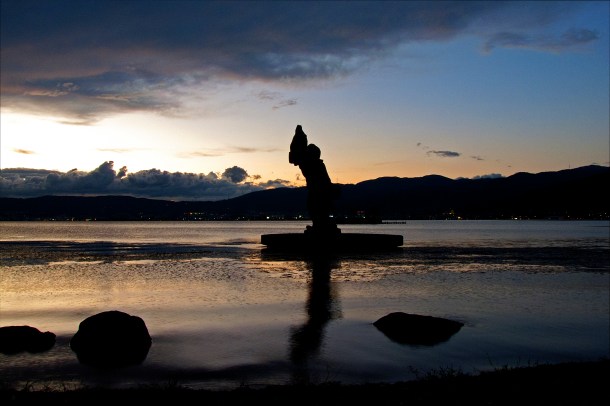
This is a shot of Nagano Prefecture’s Lake Suwa just after sunset. The statue is of Princess Yaegaki, who is a key figure in Honcho Nijushiko. Honcho Nijushiko is a five-act drama that was first performed in 1766. At the end of the story, Yaegaki walks across a frozen Lake Suwa to save her lover from a violent death.
Never an Orange

There is something magical about the feeling of a new pencil sitting within your hand. To me, they are symbolic of the creative process.
The image above was inspired by the text from a scene from Terrence McNally’s play Master Class, which follows opera singer Maria Callas as she gives a master class at Julliard. The text from that scene can be found below.
******
Maria: At the conservatory Madame de Hidalgo never once had to ask me if I had a pencil. And this was during the war, when a pencil wasn’t something you just picked up at the five and ten. Oh no, no, no, no. A pencil meant something. It was a choice over something else. You either had a pencil or an orange. I always had a pencil. I never had an orange. And I love oranges. I knew one day I would have all the oranges I could want, but that didn’t make the wanting them any less.
Have you ever been hungry?
Soprano: Not like that.
Maria: It’s. It’s something you remember. Always. In some part of you.
Silver Song/銀の歌

At a weekend festival during Silver Week, a singer entertains a crowd near Kofu Station/Kofu, Japan
Queen for the Day/今日の女王
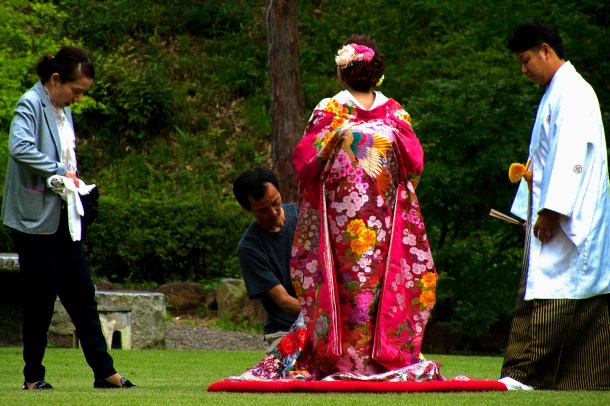
A photographer and his assistant position a bridal couple during a wedding shoot on the
grounds of Takeda Shrine/Kofu, Japan
Vanishing Dance II
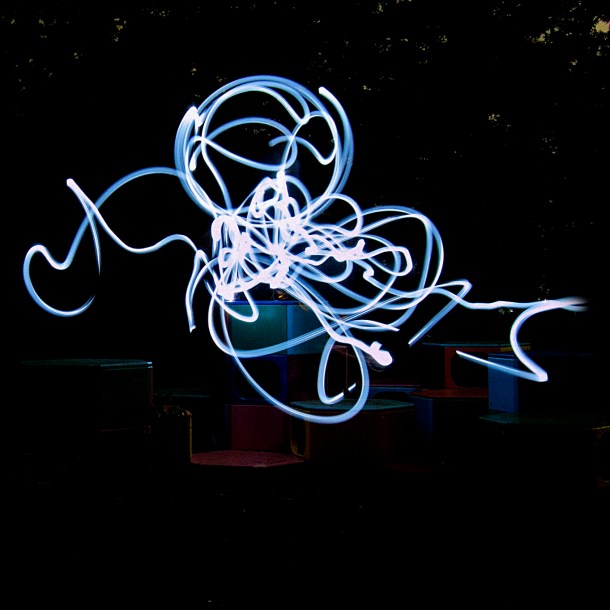
This is a 60 second exposure of me dancing while holding an LED flashlight in my hand. It was taken on the grounds of the Yamanashi Prefectural Science Center/Kofu, Japan
Please click on the link below if you would like to see another image from this shoot.
Vanishing Dance
Vanishing Dance
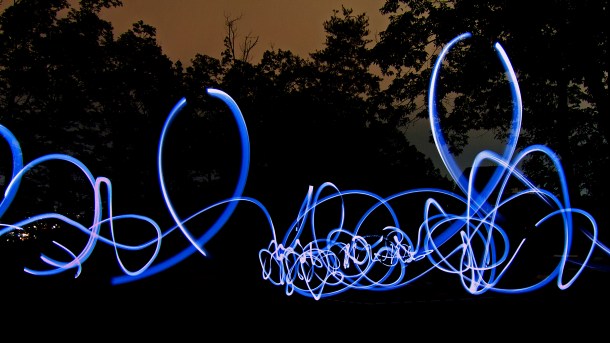
This is a long exposure shot of me dancing with an LED flashlight. It was taken on the grounds of the Yamanashi Prefectural Science Center/Kofu, Japan
Coy Koi
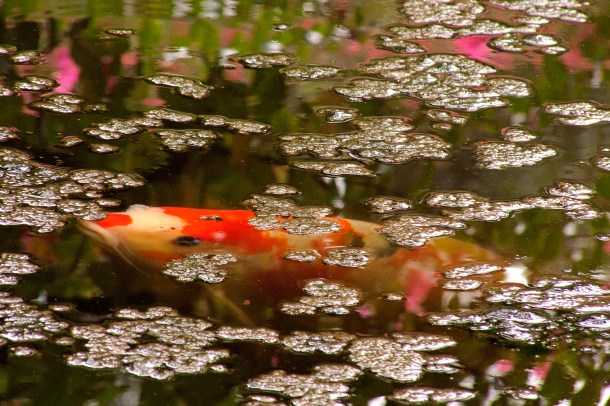
A Koi lingers below the water’s surface/Imperial Palace – Tokyo, Japan
I apologize for the clichéd homophonic title! 🙂
フクロウのみせ/Fukuro no Mise

This is one of the many owls that can be seen at Fukurou no Mise Owl Cafe in Tokyo, Japan. Please click on one of the links below for more information.
 sundry folly